
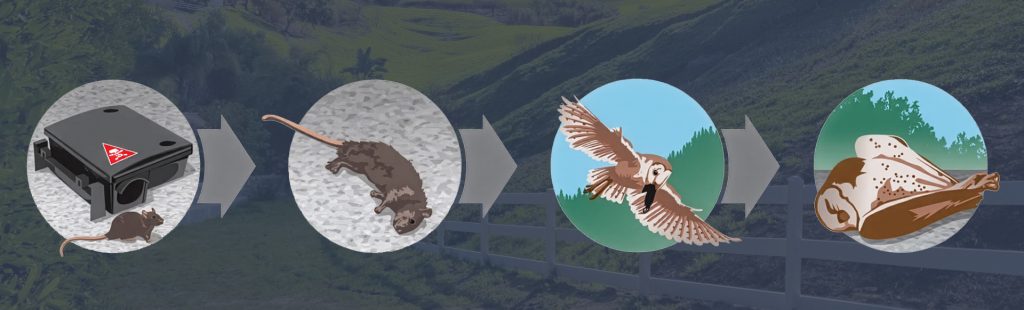
Rodenticides, particularly anticoagulant rodenticides, pose significant dangers to wildlife, domestic animals, children, and the overall ecosystem in Hidden Hills. While these products are often used to control rodent populations, their broader impacts are severe and well documented. The California Department of Pesticide Regulation regulates pesticides, including rodenticides, at the State level. In 2014, the City passed a Resolution urging all property owners to cease the purchase and use of anticoagulant rodenticides on their property and committed the City of Hidden Hills to not use anticoagulant rodenticides on City property. A local non-profit organization, Poison Free Malibu, offers Do-It-Yourself and professional poison-free management recommendations.
How Rodenticides Harm Wildlife
When rodents consume poison, they often do not die immediately. Instead, they become weak and slow, making them easy prey for natural predators. This creates a chain reaction known as secondary poisoning, in which the predator ingests the toxic rodent. Animals most commonly affected include:
- Owls, hawks, and other raptors
- Coyotes
- Bobcats
- Mountain lions
- Domestic pets who may find or ingest poisoned rodents
These species play a vital role in maintaining natural rodent control. When they are exposed to rodenticides, not only do they suffer painful effects, but the loss of these predators can cause rodent populations to increase – creating a cycle that invites even more poison use.
Environmental and Community Risks
Rodenticides can have unintended consequences far beyond their initial target:
- Persistent toxins accumulate in the food chain, affecting multiple species.
- Children and pets may accidentally ingest bait or poisoned rodents, leading to potentially fatal outcomes.
- Protected wildlife often suffers internal bleeding, organ failure, or prolonged illness as a result of exposure.
- Predatory balance is disrupted, allowing rodent populations to rebound more aggressively.
These impacts are not isolated; they affect the entire community’s ecological health.
Safer, Effective Alternatives
Hidden Hills strongly discourages the use of rodenticides and instead recommends integrated pest-management practices that eliminate attractants and prevent rodents from entering homes:
1. Exclusion Methods
- Seal holes, vents, and entry points.
- Install door sweeps and repair damaged screens.
- Trim vegetation away from the sides of homes.
2. Sanitation Practices
- Keep trash bins tightly sealed.
- Remove fallen fruit and outdoor food sources.
- Store pet food indoors.
3. Mechanical Traps
- Use snap traps placed in secure, enclosed locations.
- Avoid glue traps where pets or wildlife may become caught.
- Monitor and reset traps as needed for continued effectiveness.
These approaches address the root causes of rodent activity without harming predators that provide natural, long-term rodent control.
A Communitywide Commitment
Protecting wildlife protects Hidden Hills. By reducing rodenticide use, residents help preserve the natural predators that keep our ecosystem balanced. This collective effort strengthens environmental health, reduces risks to pets and children, and aligns with the City’s commitment to humane and sustainable wildlife practices.