
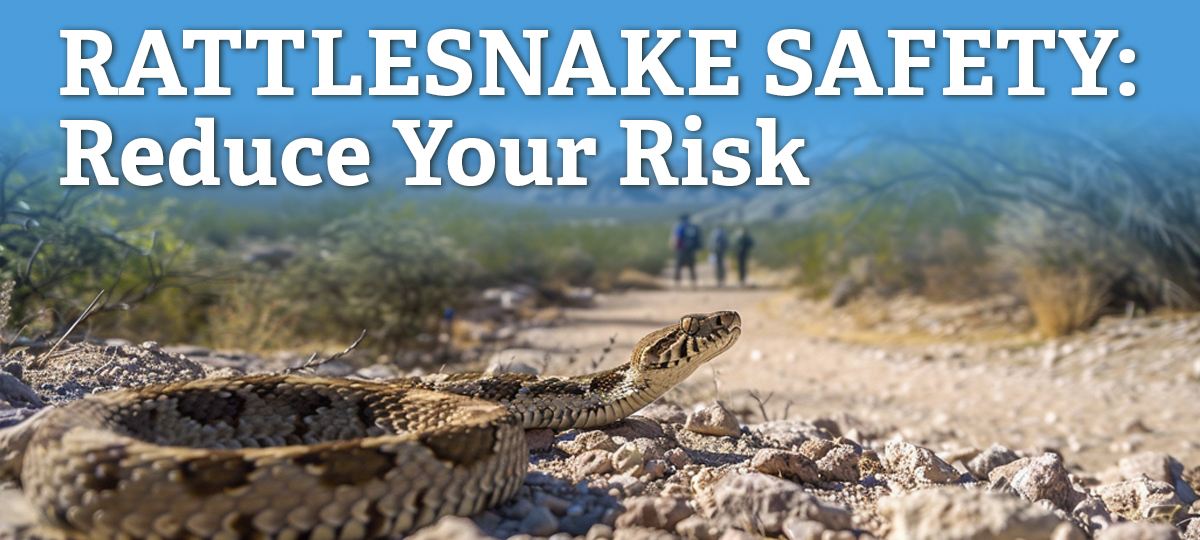
Rattlesnake Safety: Awareness Is Your Best Protection
With spring bringing warmer temperatures across Southern California, residents are returning to local trails and open spaces. This year, however, the season has started with a serious reminder: rattlesnake activity is already on the rise.
Recent incidents reported in the region underscore the importance of awareness. In March, a Ventura County hiker died after being bitten on a trail, marking the second fatal rattlesnake bite in Southern California this year. These tragic events are rare, but officials note that an early stretch of warm, dry weather has increased snake activity and encounters with people.
Rattlesnakes are native to our area and play an important role in the ecosystem. They are not aggressive by nature and will usually avoid people. Most bites occur when a snake is startled, stepped on, or approached too closely.
How to Reduce Your Risk
A few simple precautions can significantly reduce the chance of an encounter:
- Stay on designated trails and avoid walking through tall grass, brush, or rocky areas
- Watch where you step, sit, or place your hands
- Wear closed-toe shoes or boots when hiking
- Keep pets on a leash and close by
- Avoid hiking at dusk or dawn when snakes are more active
- Never attempt to handle, move, or disturb a snake
If You Encounter a Rattlesnake
- Stop immediately and remain calm
- Keep your distance (at least several feet; snakes can strike quickly)
- Slowly back away and give the snake space to retreat
- Do not throw objects or try to scare it
A rattlesnake’s rattle is a warning. Respecting that warning is key to staying safe.
If a Bite Occurs Prompt Medical Care is Critical:
- Call 911 immediately
- Keep the person calm and as still as possible
- Position the affected limb below heart level if possible
- Do not apply a tourniquet, cut the wound, or attempt to suck out venom
Most rattlesnake bites are treatable when medical care is received quickly.